Sales Pipeline Automation To Reduce Pipeline Friction
by Mentor Group

Pipeline friction is the hidden tax on revenue teams.
It shows up as stalled opportunities, slow hand-offs, duplicated admin, unclear next steps, and late-stage surprises (procurement, legal, security) that push deals out of quarter.
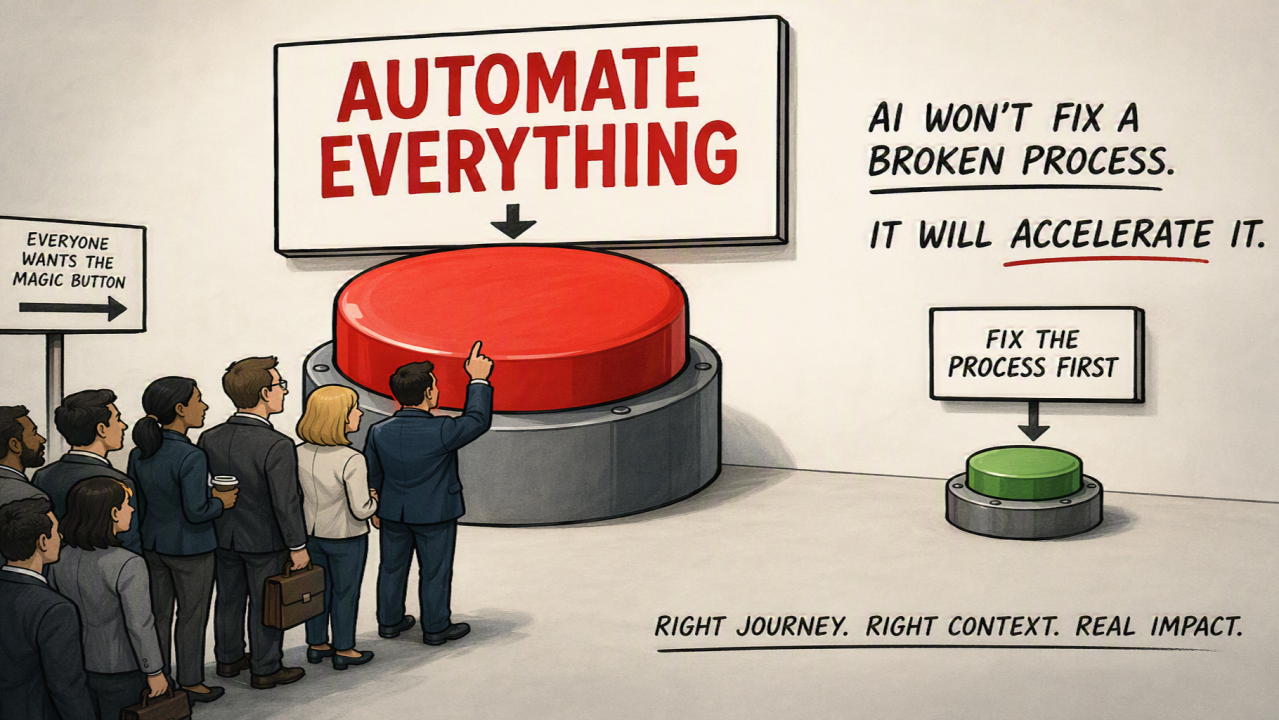
Automation can reduce that friction — but only when it is applied to the right problems, with clear standards and governance. Automating a messy process simply scales mess faster.
This pillar guide explains how to integrate automation to reduce pipeline friction, what to automate first, how to design it safely, and how Mentor Group’s “your way, not our way” approach helps teams embed automation into the way they sell today.
What “pipeline friction” means (a practical definition)
Pipeline friction is any repeated point of delay, rework, or ambiguity that slows the movement of opportunities through stages.
Common forms of pipeline friction include:
- Manual hand-offs between roles (SDR → AE → SE → legal)
- Inconsistent stage definitions and missing evidence
- Vague next steps (“follow up”, “check in”) that create waiting
- Missing or stale CRM data that breaks forecasting and coaching
- Governance steps arriving too late (procurement, security, legal)
- Resource constraints (SE capacity, approvals) causing queues
Automation reduces friction when it increases:
- Clarity (what must happen next)
- Consistency (standards applied reliably)
- Speed (less waiting and rework)
- Capacity (less admin, more selling and coaching)
The principle that makes automation work: standardise before you automate
Before you automate any pipeline workflow, confirm two things:
- You have observable stage criteria (what must be true to enter/exit)
- You have a next-step standard (mutual, dated, buyer-owned)
If these aren’t in place, automation will reinforce the wrong behaviours.
A simple rule:
- Automate decisions and hand-offs that are already clear.
- Fix ambiguity and weak evidence before automating.
Step 1: Diagnose where friction lives (use data, not anecdotes)
Start with a short diagnostic using CRM signals and frontline feedback.
Look for patterns such as:
- Rising days in stage in one stage (bottleneck forming)
- Falling stage-to-stage conversion at a specific transition
- Increasing close-date slip late-stage
- High volume of deals with missing or vague next steps
- High frequency of “waiting on legal/procurement/security/SE” notes
Then validate with a small sample (10–15 deals):
- What work repeated?
- Where did the deal wait?
- Which hand-off created rework?
Your output from Step 1 should be a short list of the top 3 friction points.
Step 2: Map the deal flow and hand-offs (minimum viable process map)
Pipeline friction usually sits in transitions.
Map:
- The stages and the evidence needed to progress
- The roles involved at each stage (AE, SDR, SE, legal, procurement)
- The common hand-offs and what information is required for each
Keep it lightweight:
- One page
- Focus on the hand-offs that create waiting
This map becomes the blueprint for automation.
Step 3: Choose what to automate first (highest impact, lowest risk)
Automation works best when you start with “friction reducers” that:
- Remove repetitive admin
- Prevent deals entering stages too early
- Surface risk earlier
- Accelerate hand-offs and scheduling
A practical priority order is below.
Priority 1: Data capture and hygiene automation
Objective: reduce admin and improve decision-quality data.
Examples:
- Auto-log emails, calls and meetings into the CRM
- Auto-create tasks after key events (e.g., meeting booked → follow-up task)
- Auto-update activity fields and last-touch timestamps
- Enrichment workflows to fill missing firmographics (industry, size, region)
- Duplicate detection and merge rules
Why it reduces friction:
- Less “chasing updates”
- Faster coaching and cleaner forecasting
Priority 2: Stage governance and evidence checks
Objective: prevent stage inflation and improve progression quality.
Examples:
- Required evidence prompts when moving stage (lightweight, not bloated)
- “Gate” rules: deals cannot enter a stage unless key fields are present
- Automated reminders when deals exceed stage-age thresholds
- Alerts for missing next steps on active opportunities
Why it reduces friction:
- Stops under-qualified work flooding later stages
- Turns pipeline reviews into coaching, not admin
Priority 3: Routing, assignment and hand-off automation
Objective: reduce waiting time at transitions.
Examples:
- Lead and opportunity routing by ICP, region, segment, product line
- Auto-creation of hand-off tasks (SDR → AE) with required fields
- SE request automation with a standard intake form
- Legal/procurement intake automation with a standard checklist
Why it reduces friction:
- Faster response times
- Less confusion over ownership
- Clearer hand-off standards
Priority 4: Cadence and follow-up automation (with guardrails)
Objective: reduce “follow-up drift” without turning sales into spam.
Examples:
- Automated sequences triggered by stage changes (e.g., evaluation entered)
- Re-engagement workflows for stalled deals (time-boxed)
- Internal nudges to managers when high-value deals lose momentum
Guardrail:
- Automate prompts and structure, not mindless outreach. The content should reflect real buyer context.
Priority 5: Commercial and governance acceleration
Objective: reduce late-stage surprises and rework.
Examples:
- Early “red flag” checks for procurement/legal/security requirements
- Automated generation of standard packs (security, compliance, procurement)
- CPQ/quoting automation with pricing guardrails
- E-sign workflows to reduce contracting delays
- Approval workflows with clear thresholds (fast-path vs escalation)
Why it reduces friction:
- Pulls governance work earlier
- Prevents last-minute deal rescue mode
Step 4: Design automation around buyer progress (not internal convenience)
The best pipeline automation reinforces buyer progress.
Ask:
- What must the buyer decide next?
- What evidence proves they’re progressing?
- Which step reduces risk for the buyer (security, stakeholder alignment, mutual plan)?
Then align automation to those decision moments.
Example:
- If a deal enters Evaluation, automation should:
- Prompt for success criteria
- Ensure stakeholders are mapped
- Trigger a mutual action plan template
- Create the right internal tasks (SE review, security sequencing)
This keeps automation tied to outcomes, not admin.
Step 5: Build guardrails (avoid “automation theatre”)
Automation fails when it creates more work or encourages gaming.
Build these guardrails:
- Keep required fields minimal (decision-quality only)
- Avoid automations that force sellers to click through unnecessary steps
- Make exceptions explicit (and track why)
- Make automation outcomes visible (what changed, what was triggered)
- Review false positives (alerts that don’t matter)
A practical governance rule:
- If an automation creates friction, it must be changed or removed.
Step 6: Implement in a pilot (2–4 weeks), then scale
Automation should be piloted like a product.
Pilot approach:
- Choose one team and one stage/transition
- Define the target metric (e.g., reduce stage ageing; improve next-step quality)
- Implement automation with a tight feedback loop
- Calibrate prompts, thresholds, and gating rules
- Scale once adoption is proven
What to measure in the pilot:
- % of opportunities with mutual next steps
- Median days in stage
- Stage-to-stage conversion rate
- Close-date slip rate
- Time-to-first-action after hand-offs
Step 7: Embed automation into the operating rhythm (so it sticks)
Automation is only valuable when it changes what people do weekly.
Embed into:
- Weekly pipeline reviews (alerts as coaching triggers)
- 1:1 manager cadence (risk flags and next-step quality checks)
- Monthly stage health reviews (where automation thresholds are tuned)
The goal is not “more automation”. It’s better decisions at the right time.
Common automation mistakes to avoid
- Automating a broken process (scales friction)
- Over-gating stages (creates admin workarounds and gaming)
- Measuring activity instead of progression
- Automating outreach without buyer context (reduces trust)
- Building too many alerts (alert fatigue)
- Ignoring shared constraints (SE, legal, procurement) that need batching and standard packs
A practical automation checklist (copy/paste)
Use this checklist to plan automation that reduces pipeline friction.
Every automation should have:
- A clear friction point it solves
- A defined trigger (event, stage change, threshold)
- A defined outcome (task created, hand-off completed, risk surfaced)
- Ownership (who maintains it)
- A metric to prove it worked
Start with:
- Data hygiene automation
- Next-step prompts and missing-next-step alerts
- Stage-age alerts and bottleneck signals
- Routing and hand-off task templates
- Early governance checks and standard packs
How Mentor Group helps teams integrate automation “your way, not our way”
Mentor Group’s enablement approach is designed to make automation adoptable.
Rather than imposing a generic playbook, we start with your reality:
- Where your pipeline is stalling, slipping, or inflating
- Which hand-offs and governance steps create the most rework
- What standards (evidence, next steps, notes) will improve flow fastest
Then we help you:
- Define simple, observable stage standards that automation can reinforce
- Design automation around your ICP and buying journey
- Embed the new workflows into manager cadence and coaching routines
- Measure impact using pipeline outcomes (conversion, stage ageing, slip)
This is how automation becomes a friction reducer — not another tool that teams work around.
Call to action
If you’re considering automation to reduce pipeline friction, start with one question: which specific delays and rework loops are costing you the most time and predictability?
Contact Mentor Group to discuss how to identify the highest-impact friction points and design automation that fits your selling motion — improving pipeline flow without adding admin or forcing a rigid methodology.
Summary FAQ
What is pipeline friction in sales? Pipeline friction is any repeated delay, rework, or ambiguity that slows opportunity progression, such as weak hand-offs, vague next steps, late governance steps, or inconsistent stage standards.
What should we automate first to reduce pipeline friction? Start with data hygiene automation, next-step prompts/alerts, stage-age and bottleneck alerts, routing and hand-off templates, and early governance checks.
How do you prevent automation from creating more admin? Standardise stage evidence and next-step definitions first, keep required fields minimal, pilot in one team, and remove automations that create friction or gaming.
How do you use automation to stop deals stalling in stages? Use stage-age thresholds, missing-next-step alerts, and evidence prompts at stage change to surface risk early and trigger coaching or action.
How can automation help late-stage deals (procurement/legal/security)? Pull governance steps earlier with red-flag checks, standard packs, approval workflows, and e-sign/CPQ processes that reduce rework and waiting.
What metrics prove automation is reducing friction? Improved next-step quality, reduced median days in stage, improved conversion at key transitions, reduced close-date slip rate, and faster hand-off response times.
How does Mentor Group approach automation differently? Mentor Group applies a “your way, not our way” approach: diagnose your specific friction points, define standards automation can reinforce, embed workflows into cadence, and measure impact in pipeline outcomes.