How Do You Measure Enablement ROI?
by Mentor Group

Quick Answer
You measure enablement ROI by starting with the commercial outcome you want to improve, then tracking whether the initiative improves capability, changes seller or manager behaviour, increases productivity and contributes to commercial performance. A strong ROI story connects early indicators, such as assessment scores and methodology adoption, to later outcomes such as win rate, deal velocity, forecast accuracy and quota attainment.
Key takeaways
- Enablement ROI should start with the business outcome, not the training activity.
- The strongest ROI model tracks four connected areas: capability, adoption, productivity and commercial impact.
- Activity metrics, such as completions and attendance, can support the story but should not be treated as proof of ROI on their own.
- Baseline data is essential. If you do not know where performance started, it is difficult to show what improved.
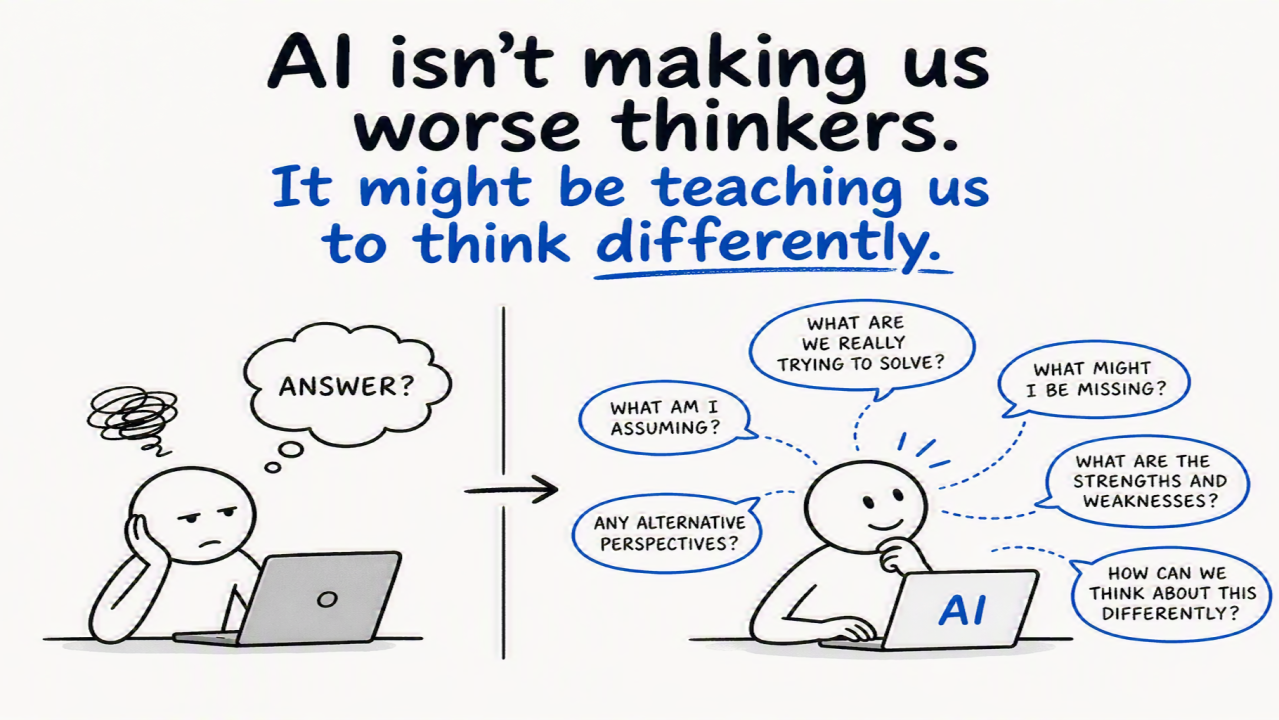
- AI should be measured by the work it makes faster, simpler or more effective, not by prompt volume or login counts alone.
What enablement ROI really means
Enablement ROI is the measurable improvement created when an enablement initiative helps sellers, managers or customer-facing teams perform better in ways that matter to the business.
That means ROI should not be judged by whether people attended a workshop, completed a module or downloaded a playbook. Those measures can be useful, but they mainly show that enablement happened. They do not show whether performance improved.
A better question is: did the business get better because of the capability investment?
To answer that question credibly, enablement teams need to connect four types of evidence: capability, adoption, productivity and commercial impact.
The enablement ROI chain
Reference model
Capability leads to adoption. Adoption supports productivity. Productivity contributes to commercial impact. No single metric proves the whole story, but together these measures create a credible explanation of how enablement contributed to business performance.
1. Start with the business outcome
The first step in measuring enablement ROI is to define the commercial outcome before the enablement activity begins.
Do not start with a programme objective such as “improve sales skills” or “increase engagement”. Start with the result the business wants to improve.
Examples include:
- Increasing win rate
- Improving forecast accuracy
- Reducing sales cycle length
- Increasing average deal value
- Improving pipeline conversion
- Increasing the percentage of sellers achieving quota
This matters because enablement ROI is easier to prove when success has been defined before the programme starts. If the commercial outcome is unclear, the ROI story will be unclear too.
Summary: The first step in measuring enablement ROI is to define the business outcome before the enablement activity begins.
2. Identify the behaviour that needs to change
Business outcomes improve because people do something differently. A training programme does not increase win rates by itself. Sellers and managers change the way they qualify, coach, forecast, negotiate or engage customers.
The next question is: what behaviour would we expect to see if the initiative is working?
|
Business outcome |
Behaviour to measure |
|
Improved win rate |
Better discovery and qualification |
|
Faster deal velocity |
More consistent opportunity management |
|
Improved forecast accuracy |
Better CRM discipline and deal reviews |
|
Larger deal sizes |
Stronger value conversations and stakeholder engagement |
|
Increased seller productivity |
Greater use of AI-supported workflows |
This step is important because behaviour change is the bridge between learning and results. If sellers have not changed how they work, it is difficult to argue that enablement has influenced business performance.
Summary: Adoption is the bridge between learning and business results because it shows whether sellers and managers are behaving differently.
3. Measure capability
Capability metrics show whether sellers or managers have developed the skills, knowledge and confidence needed to perform differently.
Useful capability measures include:
- Knowledge assessment scores
- Role-play performance
- Manager observation scores
- Discovery conversation quality
- Negotiation assessments
- Coaching quality assessments
- AI literacy and prompting proficiency
Capability measures are early indicators. They help show that the conditions for future performance improvement are being created. However, improved capability is not enough on its own. People still need to apply that capability in the flow of work.
Summary: Capability metrics show whether enablement has improved the skills and confidence required for better sales performance.
4. Measure adoption
Adoption metrics show whether people are applying new skills, tools and ways of working consistently.
Useful adoption measures include:
- Methodology utilisation
- Qualification framework usage
- CRM completion quality
- Coaching frequency and consistency
- Structured deal reviews completed
- Account planning completion
- Playbook utilisation
- AI workflow adoption
Adoption is often where ROI starts to become visible. It shows whether enablement has moved beyond learning activity and started to influence day-to-day sales behaviour.
For example, if an organisation wants to improve forecast accuracy, adoption measures might include CRM quality, deal review discipline and manager coaching consistency.
5. Measure productivity
Productivity metrics show whether enablement has made work faster, simpler or more efficient.
This is especially important when AI is part of the enablement ecosystem. AI can reduce administrative effort, speed up research, support meeting preparation and help managers identify coaching opportunities. The measurement question is not “how many people used AI?” It is “what work became easier, faster or more valuable?”
Useful productivity measures include:
- Time spent selling
- Time spent on administration
- Meeting preparation time
- Account research time
- Proposal creation time
- CRM administration time
- Follow-up email drafting time
- AI-enabled time savings
Productivity gains may be easier to see before commercial results fully appear. For example, if sellers save two hours per week on account research and CRM updates, the business can measure whether that time is being redirected towards customer-facing activity.
Summary: Productivity metrics help show whether enablement has reduced friction and created more time for customer-facing work.
6. Measure commercial impact
Commercial impact metrics show whether business performance is moving in the right direction. These are the measures senior stakeholders usually care about most.
Useful commercial impact measures include:
- Win rate
- Average deal value
- Pipeline conversion
- Deal velocity
- Forecast accuracy
- Quota attainment
- Revenue generated
- Customer retention and expansion revenue, where relevant
Commercial impact is usually a lagging indicator. That means it may take longer to move than capability, adoption or productivity metrics. The role of the ROI framework is to connect these measures into one credible story.
For example, a stronger ROI story might say: discovery capability improved, qualification methodology adoption increased, CRM quality improved, sellers spent less time on administration, pipeline conversion improved and win rate increased.
Metrics to avoid treating as ROI
Some metrics are still useful, but they should be treated with caution. Activity is not the same as impact.
|
Activity metric |
Why it is not enough on its own |
|
Course completions |
Shows participation, not business improvement |
|
Attendance |
Shows presence, not behaviour change |
|
Learning hours |
Shows time spent, not performance gained |
|
Content downloads |
Shows interest, not application |
|
Platform logins |
Shows access, not value created |
|
AI prompt volume |
Shows usage, not productivity or commercial impact |
These measures can provide context, but they should not be used as the primary proof of ROI. A seller can complete every module and still produce the same commercial results as before.
Summary: Activity metrics can support an ROI story, but they do not prove enablement value unless they are connected to behaviour change, productivity improvement or commercial impact.
A simple enablement ROI measurement model
Use the following model before launching any significant enablement initiative:
- Define the commercial outcome. What business result are we trying to improve?
- Identify the behaviour change. What should sellers or managers do differently?
- Define the capability required. What skills, knowledge or confidence need to improve?
- Identify productivity gains. Where can friction, time or effort be reduced?
- Select balanced measures. Which capability, adoption, productivity and commercial impact metrics will we track?
- Capture the baseline. What does current performance look like before the intervention begins?
- Review progress consistently. Are early indicators moving, and are commercial outcomes beginning to follow?
ROI statement template
We will improve [commercial outcome] by changing [seller or manager behaviour] through developing [capability], supported by [AI or productivity interventions], measured through capability, adoption, productivity and commercial impact.
Download the Sales Enablement ROI Toolkit
If you want a practical framework for building this measurement approach, download our Sales Enablement ROI Toolkit.
The toolkit expands on the four-part ROI model used in this article: capability, adoption, productivity and commercial impact. It includes examples of enablement metrics, guidance on building a Revenue Performance Scorecard, practical AI measurement considerations and a 90-day plan for establishing baseline data, tracking adoption and reviewing commercial impact.
Use the toolkit to answer four questions before launching your next enablement initiative:
- What commercial outcome are we trying to improve?
- What seller or manager behaviour needs to change?
- What capability must be developed?
- Which productivity and commercial impact measures will show whether the business improved?
The value of the toolkit is that it helps enablement, sales and revenue leaders move from reporting activity to building a credible evidence chain that shows whether enablement contributed to better business performance.
Example: measuring ROI for a win-rate initiative
Imagine a sales organisation wants to improve win rate. A weak measurement approach would only track attendance at a qualification workshop. A stronger ROI approach would connect several measures together.
|
ROI category |
Example measure |
|
Commercial outcome |
Improve win rate |
|
Behaviour change |
Better discovery and qualification |
|
Capability |
Discovery role-play score and qualification assessment |
|
Adoption |
Consistent use of qualification criteria in opportunities |
|
Productivity |
AI-assisted account and opportunity research reduces preparation effort |
|
Commercial impact |
Poor-quality opportunities exit earlier and win rate improves |
This does not rely on one metric to prove everything. Instead, the organisation builds a chain of evidence showing how enablement contributed to better performance.
How often should enablement ROI be reviewed?
A practical review rhythm is to monitor capability, adoption and productivity more frequently, while reviewing commercial impact over a longer period.
|
Review cadence |
What to review |
|
Monthly |
Capability, adoption and productivity indicators |
|
Quarterly |
Commercial impact and overall ROI story |
This rhythm reflects the way performance usually changes. Capability and adoption can move quickly. Commercial impact often takes longer, but it should become easier to interpret when early indicators are already being tracked.
Conclusion
The best way to measure enablement ROI is to avoid treating measurement as a reporting exercise after the programme ends. Measurement should be designed before the initiative begins.
Start with the commercial outcome. Identify the behaviours that need to change. Build the capabilities required. Look for productivity gains. Then track whether commercial performance starts moving in the right direction.
That approach gives enablement, sales and revenue leaders a more credible answer to the question that matters most: did the business get better because of the investment?
FAQs
How do you measure ROI in sales enablement?
Measure sales enablement ROI by tracking whether capability improves, behaviours change, productivity increases and commercial outcomes move. A balanced ROI approach should include measures across capability, adoption, productivity and commercial impact.
What are the best metrics for enablement ROI?
The best metrics depend on the business outcome, but useful examples include assessment scores, methodology utilisation, coaching frequency, time saved through AI, win rate, deal velocity, forecast accuracy and quota attainment.
Why are completion rates not enough to measure enablement ROI?
Completion rates show whether people attended or finished an activity. They do not show whether sellers changed behaviour, became more productive or improved commercial performance.
Can you prove sales enablement caused revenue growth?
Enablement rarely proves causation through one metric alone. A stronger approach is to build a credible chain of evidence showing that capability improved, behaviour changed, productivity increased and commercial outcomes moved in the expected direction.
When should enablement ROI measurement begin?
Enablement ROI measurement should begin before the initiative launches. Teams should agree the business outcome, define the expected behaviour change and capture baseline data before implementation starts.